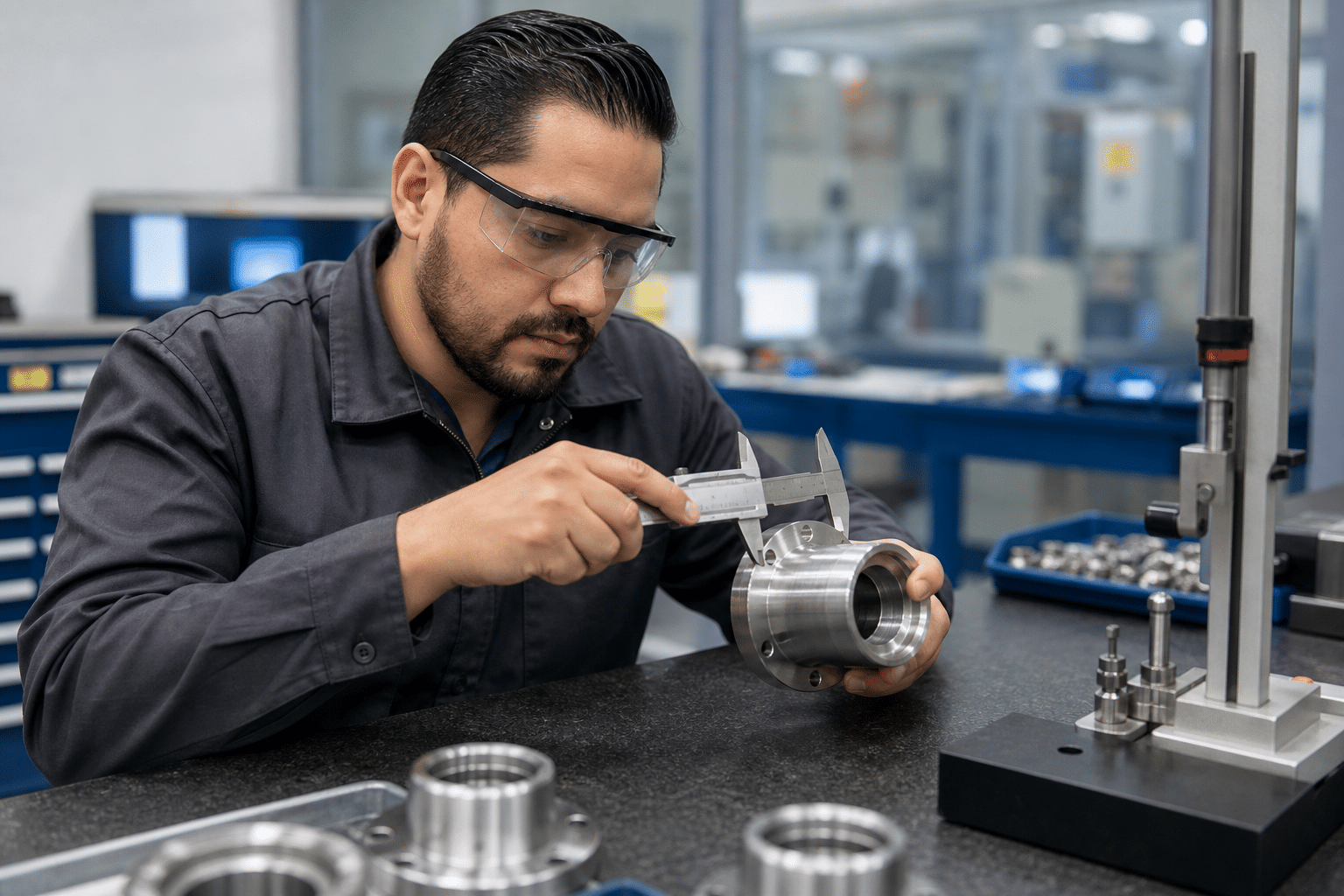
A quality assurance technician helps prevent defects from becoming normal. The work can include reviewing procedures, checking records, sampling production, documenting nonconformances, supporting audits, and helping a team find why a process is drifting. QA is broader than checking a finished product: it asks whether the process is capable of producing a consistent result.
Quality assurance is often confused with quality control. QC usually checks a product or result. QA looks more broadly at the process, records and controls that should produce a consistent result. Many employers use the terms loosely, so the job description matters.
What does a QA technician do?
The daily work depends on the industry. A technician may review batch records, inspect incoming material, perform measurements, maintain a calibration log, prepare audit evidence, investigate a complaint or verify that corrective action was completed.
| QA activity | What it may involve |
|---|---|
| Documentation | Review work instructions, records and revision control |
| Sampling | Check material or process output against a plan |
| Nonconformance | Describe the problem, contain it and route it for review |
| Corrective action | Track the cause, action owner and evidence of completion |
| Audit support | Gather records and explain how a process is controlled |
QA technician vs QC inspector
A quality control inspector may focus on measurements and acceptance decisions. A QA technician often spends more time on systems, records and prevention. The roles can overlap in smaller plants.
QA also differs from an engineer. A quality engineer may design sampling plans, analyze process capability or own larger improvement projects. A technician usually carries out defined checks, maintains evidence and escalates problems.
How do you become one?
Employers may accept a high school diploma and train a careful entry-level worker. Other roles prefer experience in manufacturing, inspection, laboratory work or an associate degree. Useful foundations include measurement, blueprint reading, spreadsheet work, basic statistics, documentation, root-cause methods and controlled procedures.
An ASQ credential may be useful for some paths, but no single certificate qualifies a person for every QA job. Ask which standard, records system and inspection tools the employer uses before paying for training.
Pay and benchmarks
Quality assurance technician is not a single BLS occupation. A role centered on product inspection may fit the BLS quality control inspector group. A role centered on process studies may be closer to industrial engineering technicians. The BLS reported a $48,570 median annual wage in May 2025 for quality control inspectors and $66,120 for industrial engineering technologists and technicians.
Those figures are benchmarks for different duties. They are not a salary range for every QA technician. Compare the job’s authority, industry, shift and required experience.
Work environment and pressure
QA technicians may work in factories, laboratories, warehouses or regulated production areas. The environment can involve noise, standing, protective equipment, chemicals, cleanrooms or repetitive measurement. Some roles follow standard hours; others support production on several shifts.
The pressure is different from repair work. You may need to stop or hold product when records or measurements are incomplete, even when production wants to keep moving. A healthy employer backs that responsibility with clear escalation rules.
Is QA a realistic change after 40?
QA can suit someone who is organized, observant and comfortable asking uncomfortable questions about evidence. Experience in maintenance, construction, logistics, healthcare, laboratory work or production can transfer when paired with careful documentation.
Start by reading real job postings. Note the standards, software, measurement tools, education and shift. Then compare a first job’s wage and training cost with your current situation. A short course may help, but examples of accurate records and disciplined problem-solving often matter just as much.
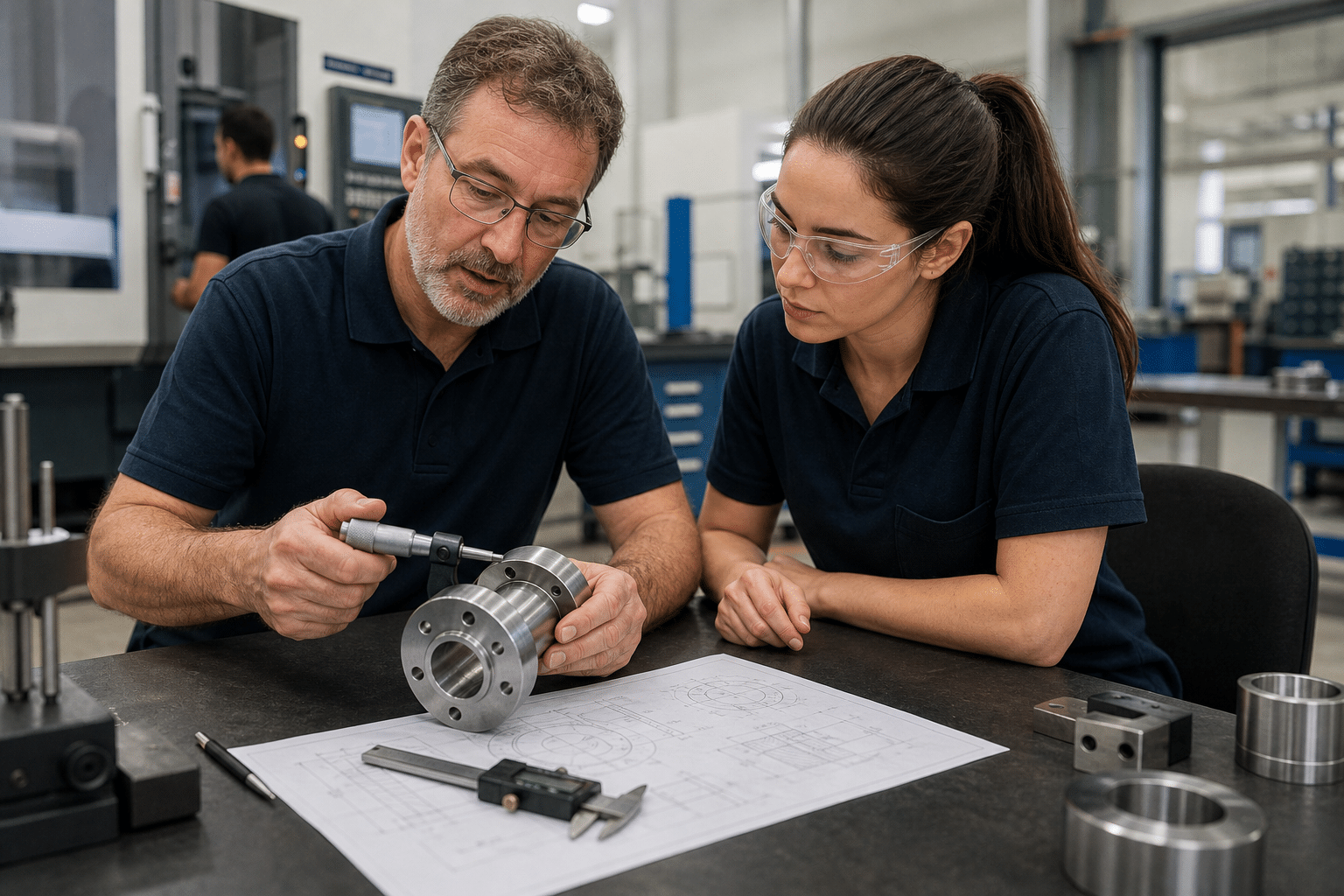
A useful finding connects the defect to the process: If a measurement is out of range, the technician may compare the material lot, equipment setting, work instruction, training record, and previous results before assigning a cause. The goal is a correction that prevents recurrence, not a record that simply closes the issue.
Follow a complaint back through the records
Suppose a customer reports a dimension outside specification. A QA technician may help locate the drawing revision, production lot, inspection results, measuring equipment record, and any earlier complaint. The immediate task is to establish what is known and which material could be affected. Authorization to hold, release, rework, or scrap product should come from the company’s defined process.
As a training exercise, build a small fictional case file with those records and mark the missing evidence. Explain the difference between a confirmed result and a possible cause. This gives an interviewer something specific to discuss and shows how your previous inventory, laboratory, or production experience might transfer into quality work.
Distinguish a correction from evidence of improvement
Replacing an incorrect label fixes that item. It does not demonstrate that the labeling problem will stop. A technician supporting corrective action may collect information about the printing process, approved artwork, changeover, and checks performed. A manager or quality specialist decides the investigation and action requirements; the technician helps keep the evidence organized.
Ask how the employer verifies that an action worked. Training staff again may be appropriate, but completion of a training sheet alone does not show whether the process now produces the intended result. Look for a follow-up check tied to the original problem, with a responsible person and a date. This helps you assess whether the job develops quality skills or mainly collects signatures.
Read the job’s authority as closely as its pay
A vacancy may combine sample inspection, document control, audits, and customer complaints under one title. Request a typical week’s task mix and ask who reviews your decisions. The relevant preparation changes if most time is spent measuring parts rather than maintaining controlled documents. Learn the standards and tools for the actual industry before buying a broad certification package.
There is also a social side to QA. You may need a production colleague to explain a missing entry or preserve material for review. Practice factual language that identifies the record and the question without assigning blame. Accurate, calm follow-up is easier to sustain than repeated confrontation. During a site visit, notice whether staff can raise discrepancies openly and whether supervisors provide timely decisions on held work.
Bottom line
Quality assurance technician is a practical route for someone who prefers prevention, records and process discipline over constant mechanical repair. It is not always a desk job and it is not always inspection. Ask what the technician is allowed to decide, what must be escalated and how success is measured.
Sources
- BLS: Quality Control Inspectors – inspection duties and pay benchmark; checked September 2, 2026.
- BLS: Industrial Engineering Technologists and Technicians – process and production benchmark; checked September 2, 2026.
- OSHA: Control of Hazardous Energy – workplace safety context; checked September 2, 2026.
- ASQ: Quality Resources – quality methods and credential context; checked September 2, 2026.
Reviewed September 3, 2026: Quality assurance work looks at procedures, records, audits, and process drift, while quality control often checks a product or result. Ask which side a job emphasizes. See quality control inspection.