
An HVAC apprenticeship combines paid field work with instruction in heating, cooling, ventilation, refrigeration, controls, and safe service practices. Programs differ widely: some are Registered Apprenticeships, some are contractor training plans, and some are entry-level jobs using the word apprentice. The sponsor, supervision, wage steps, tools, and licensing path matter more than the label.
Before you apply, look for four things in writing: the employer or sponsor, the starting wage, the training structure, and the next credential or responsibility level. The best route is not automatically the shortest course. It is the route that gets you supervised practice, usable skills, and a realistic path to better work.
Find out who owns the training plan: During the first months, an apprentice may assist with measurements, filters, line sets, tools, maintenance, and service records. That is useful when a technician explains the system and reviews the work. Ask who signs off skills and when you can perform more of the task under supervision.
At a glance
| Route | Pay while learning | What you learn first | What to verify |
|---|---|---|---|
| Registered Apprenticeship | Paid job with progressive wage increases | Jobsite work plus related instruction | Sponsor, wage schedule, hours, credential, and local rules |
| Contractor apprenticeship | Usually paid, but terms vary | The company’s equipment, process, and service standards | Written progression, supervision, tools, and what happens if work slows |
| Technical school before work | Usually no wage during class | HVACR basics, tools, safety, and lab practice | Tuition, equipment, hands-on hours, employer connections, and next step |
| Helper or trainee job | Usually paid | Setup, maintenance support, material handling, and jobsite routines | Who trains you, which tasks you may perform, and how you advance |
What an HVAC apprentice actually does
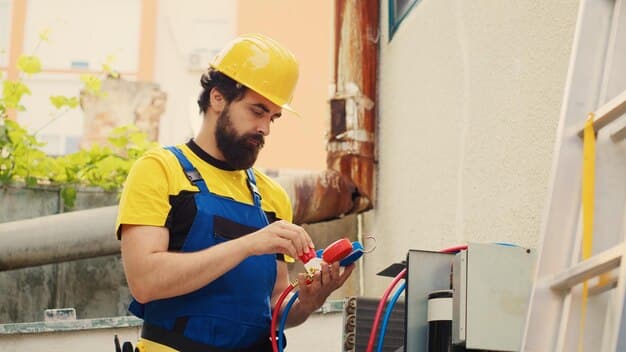
The first months may be less glamorous than the job title suggests. You might prepare tools, move equipment, insulate refrigerant lines, clean work areas, replace filters, assist with maintenance, or record readings for a more experienced technician. Those tasks are useful when somebody explains why they matter and gradually gives you more responsibility.
The U.S. Bureau of Labor Statistics says newly hired HVAC technicians commonly work alongside experienced technicians and learn basic tasks before moving into more difficult work. Apprenticeship is a way to make that progression more structured, but the actual duties still depend on the employer and the type of HVAC work available.
Residential service, commercial maintenance, installation, controls, and refrigeration can feel like different careers. A residential apprentice may spend much of the day driving between homes and explaining problems to customers. A commercial apprentice may work around larger equipment, building controls, and scheduled maintenance. Refrigeration can involve stricter temperature requirements and specialized systems.
Ask what a new apprentice did during the last ordinary week. A description based only on advanced troubleshooting is not enough.
How to find a real apprenticeship
Start with the Apprenticeship.gov Career Seekers page and its Apprenticeship Job Finder. Registered Apprenticeship listings should identify the employer or program sponsor and explain how to apply. You can also look at local HVAC contractors, union-management training committees, community colleges, state apprenticeship agencies, and American Job Centers.
Search several channels because programs recruit differently. One contractor may hire helpers and train them internally. A union program may accept applications during a defined window. A community college may know which companies hire graduates, but the school should not be your only source for licensing information.
When you find a listing, save a copy of the full description. Check the work location, wage, expected schedule, training hours, supervisor, and application process. A page that gives a large future salary but avoids the first-year wage and daily duties leaves too much unanswered.
Registered Apprenticeship versus company training
Apprenticeship.gov describes Registered Apprenticeship as paid work with a mentor, related classroom instruction, progressive wage increases, and a portable credential. That structure can make it easier to understand how skill and pay should develop.
A contractor may offer valuable training without being a Registered Apprenticeship sponsor. Company training can be a good entry route when the employer has experienced technicians, safe equipment, a clear lesson plan, and regular reviews. It becomes a weaker deal when “training” means carrying equipment indefinitely with no explanation of what comes next.
Ask these questions before accepting either route:
- Who is the employer, sponsor, or legal program contact?
- What is the starting wage and when is the next scheduled review?
- Which tasks will I perform during the first 30, 60, and 90 days?
- Who checks my work and corrects unsafe practices?
- When does related instruction take place, and is it paid?
- Which hours or credentials count toward a local license or registration?
- Which tools, boots, protective equipment, exams, and travel costs do I pay for?
- What happens if the company has a slow season or loses a contract?
The answers should be specific enough for you to compare two offers. “You will learn everything” is not a progression plan.
EPA Section 608 and other credentials
Refrigerant work creates a separate certification question. The EPA’s Section 608 requirements require technicians who maintain, service, repair, or dispose of covered equipment that could release refrigerants to pass an EPA-approved test. The EPA lists Type I, Type II, Type III, and Universal certifications for different equipment categories.
The EPA also states that apprentices can be exempt from the certification requirement while they are closely and continually supervised by a certified technician. That exemption does not mean every apprentice can handle refrigerant independently. Ask the employer which tasks you may perform and who provides the supervision.
Section 608 is not the same as a state HVAC license, a manufacturer course, or a contractor credential. The BLS notes that some states and localities require HVAC technicians to be licensed. CareerOneStop can help locate state licensing information, but the relevant state or local authority remains the place to confirm the rule for the work you plan to do.
Requirements for applicants
There is no single national application checklist for every HVAC apprenticeship. A sponsor or employer may ask for a high school diploma or equivalent, basic math, a driver’s license, reliable transportation, an aptitude test, an interview, or proof that you can work the stated schedule. Some jobs involve lifting, ladders, outdoor conditions, cramped spaces, or emergency calls, so the employer should describe the work honestly.
Your resume does not need to pretend that maintenance, warehouse work, driving, customer service, or construction is HVAC experience. Explain the useful part of that background. A person who has worked safely with tools, followed checklists, handled customers, or kept reliable schedules may have a reasonable starting point. Those strengths still need to be paired with HVAC-specific training and supervision.
Pay, tools, and the income transition
An apprenticeship wage is usually lower than the wage of a fully trained technician. Compare the first-year rate, scheduled increases, guaranteed hours, overtime rules, benefits, travel time, and seasonal changes. A slightly lower hourly rate can be workable if the program offers steady hours, paid instruction, tools, and a clear raise schedule. A higher rate may be less attractive if the work is irregular and you must buy expensive equipment immediately.
Budget for boots, basic hand tools, transportation, class materials, exams, and time spent traveling between sites. Ask whether the employer supplies a vehicle, refrigerant equipment, uniforms, larger tools, and protective equipment. Do not assume that a school tuition quote includes everything you need to start working.
For a career change after 40, the income ramp deserves a real calculation. Compare the apprentice wage with fixed household expenses, debt, commute, health coverage, and the time needed to reach the next pay step. Earlier work in electrical systems, maintenance, facilities, customer service, or troubleshooting can help you learn, but it does not remove the need for HVAC-specific practice.
Warning signs before you commit
Slow down when a program refuses to name the employer or sponsor, asks for a large payment before explaining the job, promises a license without naming the authority, or cannot describe who supervises beginners. Be cautious when a school talks about placement but will not identify typical employers or explain what graduates do next.
You should also know how the program handles safety, missed class, failed tests, complaints, and a shortage of work. An apprenticeship is a job. It should have someone responsible for training and someone responsible for safe work.
A practical application plan
- Choose the setting you want to test: residential service, commercial maintenance, installation, refrigeration, or controls.
- Search Apprenticeship.gov and local employers for actual openings.
- Compare the first-year wage, hours, commute, tools, instruction, and benefit rules.
- Ask what a new worker does during an ordinary week and who supervises each task.
- Confirm the EPA Section 608 question and any state or local license requirement.
- Keep your current income until you have a written offer with a start date, wage, schedule, and training expectations.
For the broader route, read our guide to becoming an HVAC technician. Then compare HVAC technician salary and career progression, how long it takes to become an HVAC technician, and whether HVAC work is hard on the body after 40. If you are comparing related systems, see electrician vs HVAC technician.
Sources and date checked
- Apprenticeship.gov: Career Seekers, checked August 31, 2026.
- U.S. Bureau of Labor Statistics: Heating, Air Conditioning, and Refrigeration Mechanics and Installers, checked August 31, 2026.
- U.S. Environmental Protection Agency: Section 608 Technician Certification Requirements, checked August 31, 2026.
- CareerOneStop: License Finder, checked August 31, 2026.
Wages, training availability, certification requirements, licensing rules, and job duties vary by location and employer. Confirm the current terms with the actual sponsor, employer, and relevant authority before paying for training or leaving a current job.
\n
Reviewed September 3, 2026: An HVAC apprenticeship should be judged by paid work, supervision, related instruction, and the credentials needed locally. Ask what happens after the first year and compare it with the HVAC training route.