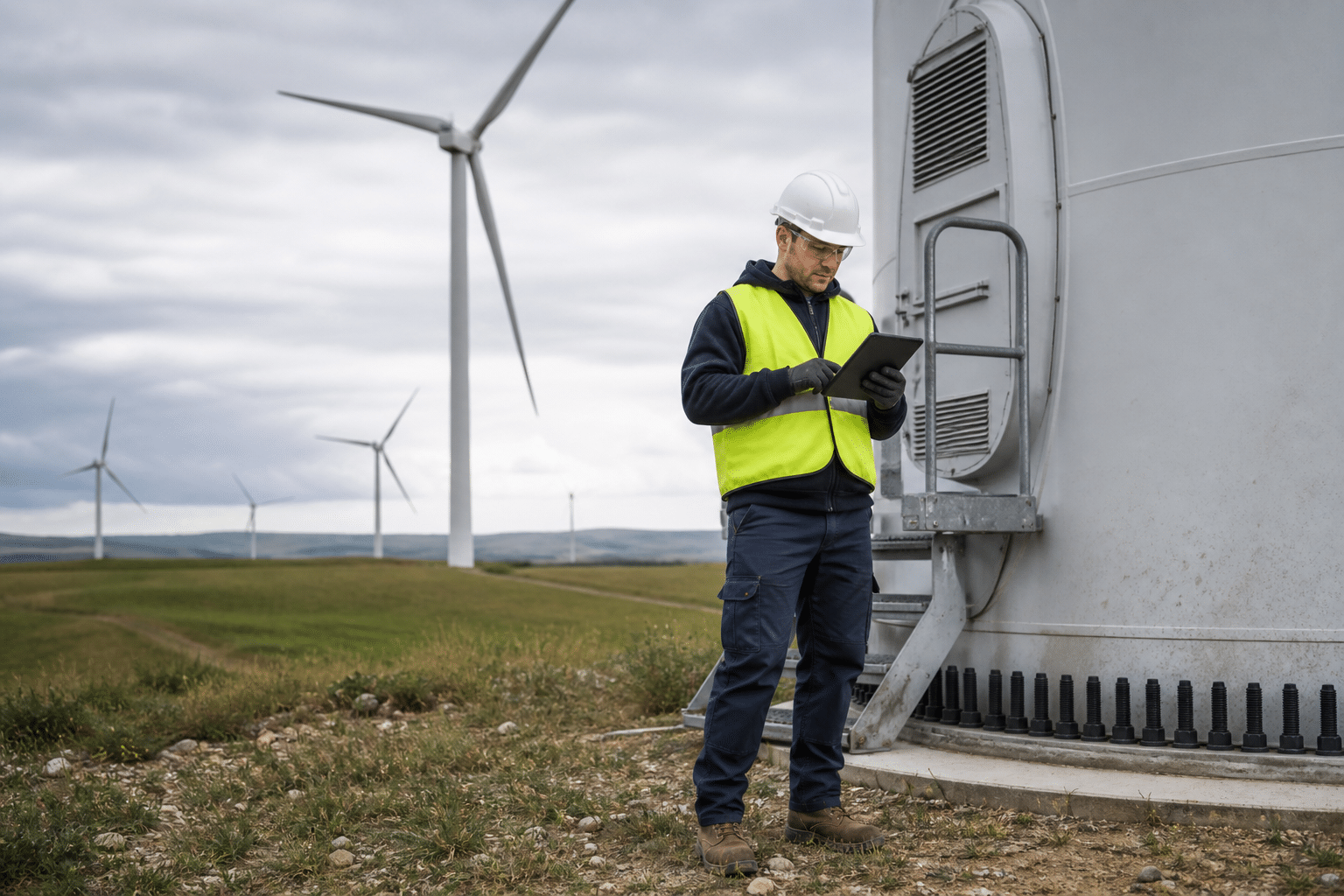
Wind turbine technician salary figures are easier to understand when the work behind the number is clear. Pay can change with experience, travel, overtime, height work, location, employer, and whether the role covers onshore maintenance, offshore service, installation, or a support shop. A national BLS figure gives context, but it is not the same as a first-year offer.
The latest U.S. Bureau of Labor Statistics data puts the median annual wage for wind turbine service technicians at $64,120 in May 2025. That is a solid benchmark for the occupation. It is not a promise that every entry-level technician starts there, and it is not the same thing as guaranteed take-home pay.
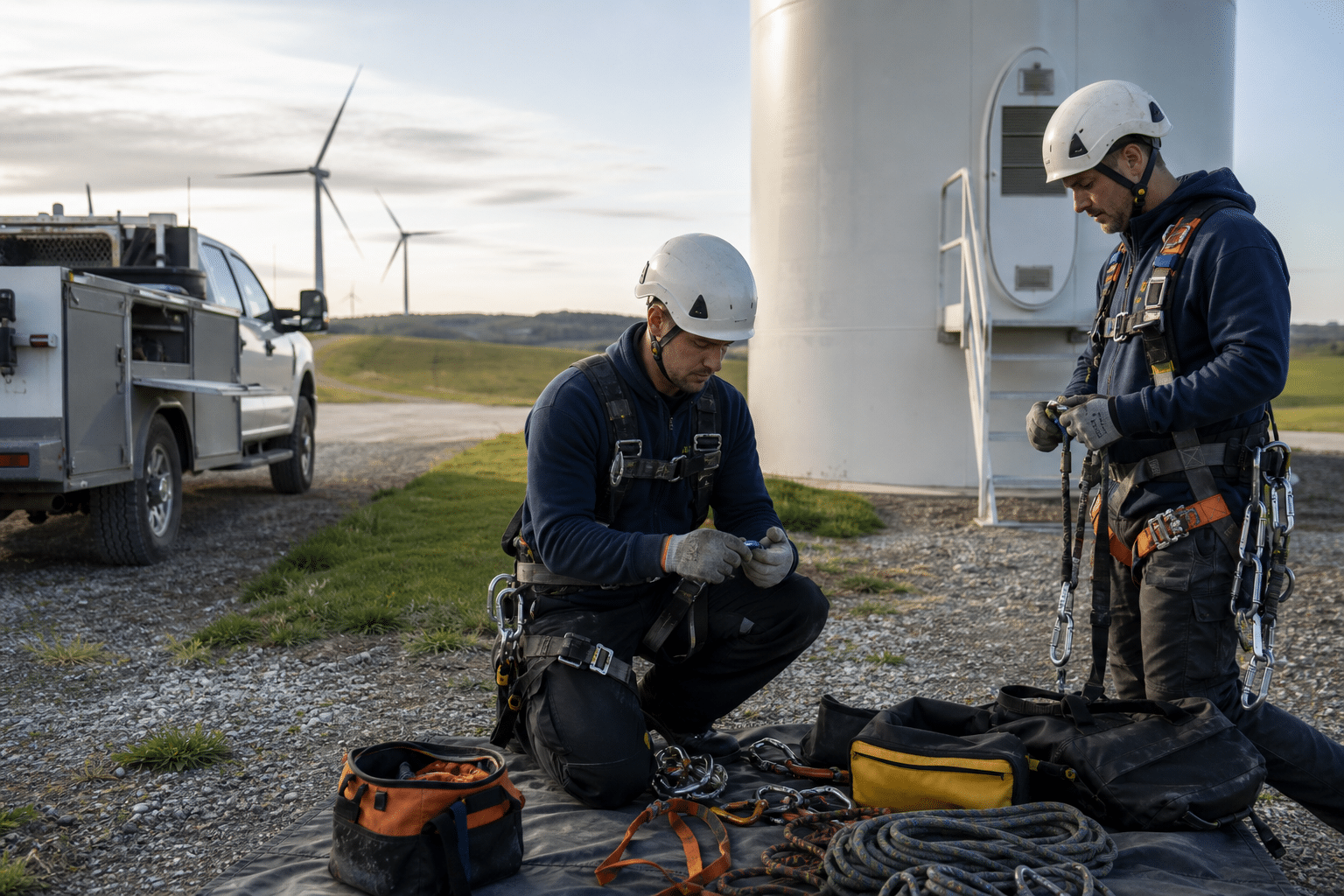
Read the offer line by line: Two wind technician jobs may show the same hourly rate while one includes frequent travel, per diem, overtime, and climbing bonuses and the other does not. Ask how many nights away, emergency callouts, and unpaid travel time the schedule normally involves.
Wind turbine technician salary at a glance
The BLS occupation is officially called wind turbine service technicians (SOC 49-9081). In ordinary job ads, you will also see windtech, wind turbine technician, field service technician, and traveling wind technician.
| BLS measure | Latest figure |
|---|---|
| Median annual wage, May 2025 | $64,120 |
| Lowest 10 percent | Less than $49,230 |
| Highest 10 percent | More than $92,460 |
| Mean annual wage, May 2025 OEWS | $68,980 |
| Mean hourly wage, May 2025 OEWS | $33.16 |
| Median hourly wage, May 2025 OEWS | $30.83 |
The median is usually the cleanest number to use when comparing occupations. Half of workers earned more than it and half earned less. The mean is pulled upward by higher earners, so it can be helpful but should not be mistaken for the typical starting wage.
The BLS figures also use different concepts. The Occupational Outlook Handbook presents the occupation’s median and wage percentiles. The OEWS release reports national employment and wage estimates, including mean and median hourly pay. Those figures line up closely, but they are not interchangeable labels.
What entry-level wind turbine technicians may earn
The official national tables do not publish a simple “first-year wind technician” salary. That matters because many people see the median and assume it is the offer they should expect before they have field experience.
An entry-level technician may be hired after a technical program, a pre-apprenticeship, military maintenance experience, or a trainee period with an employer. The starting offer depends on the local labor market and the work itself. A role that keeps you near one wind farm may have a different base wage from a traveling service position that sends you from site to site.
When comparing an offer, ask for the hourly base rate and the expected schedule separately. Then ask how overtime, per diem, travel time, lodging, bonuses, and on-call work are handled. A large annual figure can be built from a modest base rate plus a heavy travel schedule. That may be worthwhile for one person and exhausting for another.
The best way to use the BLS median is as a reference point. If a posting is far below it, investigate the training structure, location, shift, and benefits before rejecting it. If a posting is far above it, check whether the number assumes extensive travel, overtime, offshore rotations, or a contractor arrangement.
How experience changes pay
Experience tends to change a technician’s value in several ways, not simply by adding years to a résumé.
New technicians
New technicians usually need to prove that they can work safely, follow a maintenance procedure, document their work, and function as part of a crew. A technical certificate can help, but it does not replace the employer’s evaluation of practical habits.
Early work may include inspections, routine maintenance, tool control, component replacement, troubleshooting support, and data recording. It is normal for a new technician to spend time learning a manufacturer’s equipment and the site’s safety rules before handling the hardest repairs.
Experienced field technicians
With experience, technicians can take on more complex mechanical, electrical, hydraulic, or control-system troubleshooting. They may also be trusted to lead a job, coach newer workers, coordinate with a control center, or complete detailed service reports without close supervision.
Those responsibilities can support a higher wage, but the title alone does not guarantee it. Ask what the next level actually involves. “Senior” can mean technical responsibility, crew leadership, difficult travel, or simply a different pay band depending on the employer.
Lead technicians and specialists
Lead technicians may coordinate a small crew and communicate with site management, engineers, or a manufacturer representative. Specialists who can diagnose recurring faults, work on major components, or support commissioning may have more leverage in the job market.
This is also where travel can blur the picture. A technician with a higher annual total may be working longer rotations, accepting emergency callouts, or spending weeks away from home. That is compensation for a different lifestyle, not free money.
Pay by industry
The BLS reports different median wages for several major industries employing wind turbine technicians. The latest figures on its occupation page are:
| Industry | Median annual wage, May 2025 |
|---|---|
| Commercial and industrial machinery repair and maintenance | $70,670 |
| Wind electric power generation | $65,000 |
| Power and communication line construction | $63,080 |
These numbers are useful because “wind technician” does not describe one employer model. A manufacturer, an independent service company, a wind-farm operator, and a construction contractor may all use similar titles while offering different schedules and benefits.
Industry medians are not individual salary quotes. They also do not include every possible source of compensation. The BLS notes that its wage data generally do not cover self-employed workers, so a contractor’s gross billing should not be compared directly with an employee’s wage.
Location matters, but state averages need care
Wind jobs are concentrated where wind farms, turbine manufacturers, service hubs, and transmission projects operate. A state with a lot of installed capacity may offer more opportunities, but that does not mean every county pays the same rate.
The BLS points readers to its Occupational Employment and Wage Statistics profiles for state and metropolitan-area data. Use that tool to check the occupation and geography together. A state figure can still hide differences between rural wind-farm work, a regional service center, and a higher-cost metro area.
When comparing locations, include more than the advertised wage:
- housing and commuting costs;
- how much time you will spend away from home;
- local availability of technical training;
- travel reimbursement and per diem rules;
- weather, terrain, and the length of the busy season.
An offer with a slightly lower wage may leave you better off if it keeps you close to home and includes reliable benefits. A higher hourly rate may be less attractive if you pay for frequent travel between jobs or lose unpaid time between projects.
Does travel increase wind technician pay?
It can increase total earnings, but there is no universal premium. Traveling roles may include overtime, travel-day rules, per diem, lodging, or rotation pay. Each item has to be read in the employer’s written policy.
Ask these questions before treating a travel job as a high-paying job:
- Is the posted rate the base wage or an estimated annual total?
- When does overtime begin, and is travel time paid?
- Is per diem taxable, and does it continue on days off?
- Who pays for hotels, flights, rental vehicles, and meals?
- How long are the rotations, and how often can you return home?
Offshore work can involve especially long rotations and strict medical, safety, and access requirements. The BLS describes wind technicians as working outdoors, in confined spaces, and often at considerable heights. The pay discussion has to include those working conditions because they shape the job, not just the paycheck.
Training and credentials that can support a better offer
The BLS lists a postsecondary nondegree award as the typical entry-level education and says technicians normally receive long-term on-the-job training. In practice, employers may look for mechanical aptitude, electrical troubleshooting, climbing comfort, computer skills, a valid driver’s license, and the ability to pass site-specific safety training.
Registered Apprenticeship is another route to compare. Apprenticeship.gov describes it as paid work with a mentor, progressive wage increases, related classroom instruction, and a portable credential. That structure can make the early stage more manageable because you are earning while learning instead of paying for every hour of training upfront.
Do not assume that one certificate automatically qualifies you for every wind employer. Ask the school or sponsor which equipment, rescue methods, electrical skills, and safety standards are actually covered. Then compare that list with current job postings in the locations where you are willing to work.
For a broader overview of the work itself, see our guide to what wind turbine technicians do and how to get started. If you are comparing the electrical side of the trade, our industrial electrician salary guide uses the same principle: treat national data as a benchmark, then examine the actual job conditions.
Is wind turbine technician pay worth the trade-offs?
For the right person, it can be. The work offers a technical path without requiring a four-year degree, and the BLS projects much faster-than-average employment growth for the occupation. But the job also asks for physical stamina, comfort with heights, careful safety behavior, and flexibility about weather and travel.
Someone changing careers after 40 should pay particular attention to recovery time, climbing demands, and the difference between a short training program and a job that keeps you on ladders all day. Our career-change roadmap can help with the broader planning, but the final test should be practical: visit a training center, speak with a current technician, and read the schedule in real job postings.
It is also worth comparing adjacent paths. Industrial electricians may work in factories and facilities rather than wind farms. Diesel mechanics may have more local employers and less climbing, while offering a different pay profile and training route.
Bottom line
The latest BLS benchmark for wind turbine technician salary is $64,120 per year at the median, with the lowest 10 percent below $49,230 and the highest 10 percent above $92,460 in May 2025. Industry, location, experience, overtime, and travel can move an individual offer up or down.
Use that benchmark to ask better questions, not to predict your first paycheck. The offer letter, schedule, travel policy, training plan, and safety expectations will tell you far more about the job you are actually considering.
Sources
- U.S. Bureau of Labor Statistics: Wind Turbine Technicians
- BLS Occupational Employment and Wage Statistics: May 2025 national wage table
- Apprenticeship.gov: Career Seekers
- OSHA: Falls in Wind Energy
\n
Reviewed September 3, 2026: Wind technician pay depends on travel, climb work, overtime, location, and whether the role is onshore, offshore, or shop-based. Compare the salary with the physical demands and training route in wind turbine technician work.