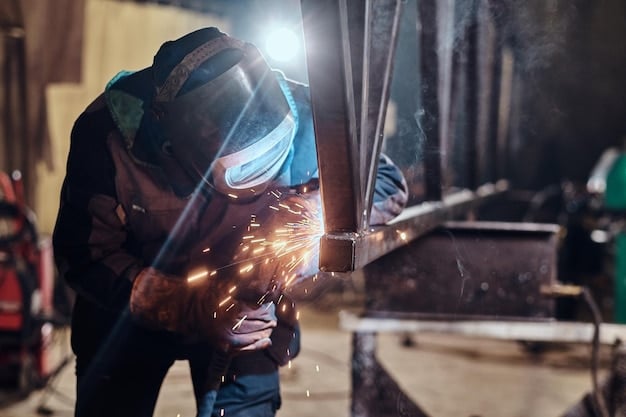
Becoming a welder usually means learning a specific process well enough to produce acceptable work under supervision, then building experience with the materials and positions employers use. You can start through welding school, an employer, an apprenticeship, community college, or military training. The right route depends on the job you want to perform, not on a universal welder license.

There is no single national welder license that makes someone qualified for every job. A certification, an employer weld test, and a state or local license can be different things.
Choose the target weld before choosing school: A course that teaches basic MIG work may not prepare you for pipe, structural plate, stainless steel, or an employer’s bend test. Ask which processes and positions local employers use, then look for supervised practice in that area.
At a glance
| Route | Pay while learning | Main training | Best fit |
|---|---|---|---|
| Welding school | Usually no wage during class | Shop practice, processes, blueprint reading, and safety | Someone who wants structured practice first |
| Employer entry role | Paid, terms vary | Supervised production and on-the-job learning | Someone who can start with basic tasks |
| Apprenticeship | Paid job with planned progression | Work experience plus related instruction | Someone who wants income and a defined program |
| Military or prior fabrication experience | Depends on the situation | Existing technical experience may transfer | Someone with documented metalwork or equipment skills |
The U.S. Bureau of Labor Statistics says welders typically need a high school diploma or equivalent together with technical and on-the-job training. Some employers hire inexperienced workers, while others prefer formal training or a credential.
Choose the kind of welding work first
"Welding" covers several work settings. A fabrication shop may produce repeat parts from drawings. Construction and field repair can mean weather, travel, changing positions, and work at height. Heavy equipment, structural steel, shipyard, pipeline, and maintenance roles may use different materials, processes, tests, and schedules.
Before paying for a course, speak with local employers. Ask which processes they use, what entry-level workers do, whether they test applicants, and which credentials they recognize. A school built around one process may not prepare you for the work available in your area.
Learn the basics that employers actually use
An entry-level welder needs more than the ability to make a bead. Training may include shop math, measurements, blueprint or drawing reading, fit-up, joint preparation, equipment setup, inspection, and safe handling of hot metal. Employers may also care about attendance, documentation, housekeeping, and whether you can follow a procedure without constant correction.
Practice matters. A short class can introduce a process, but competence usually grows through repeated work and feedback. Ask how much time is spent in the shop, how projects are assessed, and whether the program has current equipment.
School, employer, or apprenticeship?
Welding school can give you a controlled place to build hand skills and learn safety before entering production. Compare total tuition, consumables, protective equipment, class size, practice time, completion rules, and employer connections. Do not assume graduation guarantees a job or a certification.
An employer may hire you for material handling, fit-up assistance, cleanup, or basic production while you learn. Ask who supervises you and how the company decides when you are ready for a more demanding task. A paid job is useful, but a vague promise of future training is not the same as a structured program.
An apprenticeship combines paid on-the-job learning with related instruction. Search Apprenticeship.gov and ask the sponsor what work, classes, wage steps, and credentials are included. The program should identify the employer or sponsor and explain how progress is recorded.
Certifications, tests, and local rules
Some employers require a weld test for a particular process, material, position, or procedure. A professional certification may cover a defined scope. Neither one automatically proves that you can perform every type of welding.
Welders may need a license in some states or localities, according to BLS. Requirements vary, so check the authority connected to the work you want to perform. Ask who pays for tests, how often they must be renewed, and whether a failed test changes your job status.
Safety training is part of the route. BLS notes exposure to fumes, hot materials, intense light, awkward positions, and heavy metal. Employers should explain ventilation, protective equipment, electrical safety, and procedures for the specific jobsite.
Budget for the first paid job
List more than tuition. You may need a helmet, gloves, protective clothing, boots, eye protection, transportation, class materials, test fees, and time away from work. Some employers provide equipment, but policies differ. Ask what must be ready on the first day.
If you are changing careers after 40, compare the first wage with your fixed expenses rather than with an experienced welder’s advertised rate. Maintenance, mechanics, fabrication, quality control, and production experience may help you learn faster. They do not replace a required test or welding-specific practice.
A first-month checklist
- Pick the work setting you want to test: fabrication, construction, repair, manufacturing, or another specialty.
- Contact three employers and ask about entry-level roles, processes, shifts, and tests.
- Compare a school, employer route, and apprenticeship by total cost and pay while learning.
- Confirm the protective equipment, transportation, and tools you must supply.
- Ask the relevant state or local authority whether licensing applies to your intended work.
- Keep a record of the processes, materials, positions, classes, and tests you complete.
Read our welder salary guide before comparing offers. Then use How Long Does It Take to Become a Welder? for the timeline and Is Welding Hard on the Body? for the physical side. The plumber apprenticeship guide explains a similar paid-training question in another trade.
Sources and date checked
- U.S. Bureau of Labor Statistics: Welders, Cutters, Solderers, and Brazers, checked August 30, 2026.
- Apprenticeship.gov: Career Seekers, checked August 30, 2026.
Confirm the process, certification, license, safety, and wage requirements with the employer, sponsor, and relevant authority before enrolling or accepting work.
\n
Reviewed September 3, 2026: Welding school is only one entry route. Employer training, apprenticeships, and targeted certification may fit better depending on the work you want. Use this guide with welder certification requirements before choosing a program.
\n
Reviewed September 3, 2026: Welding school, employer training, apprenticeships, and certification tests can lead to different first jobs. Choose the process and work setting first, then select training that matches it. See welder certification.