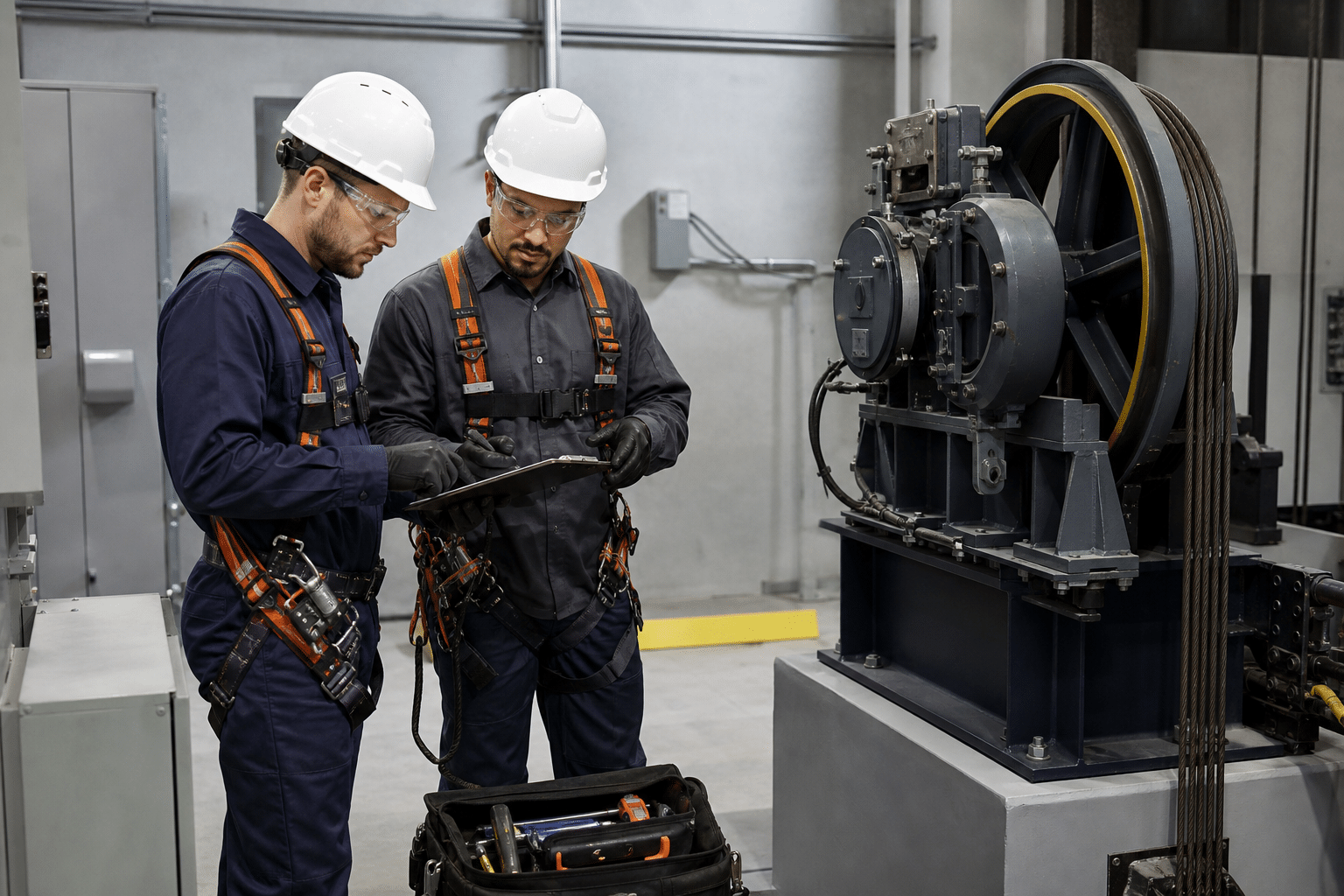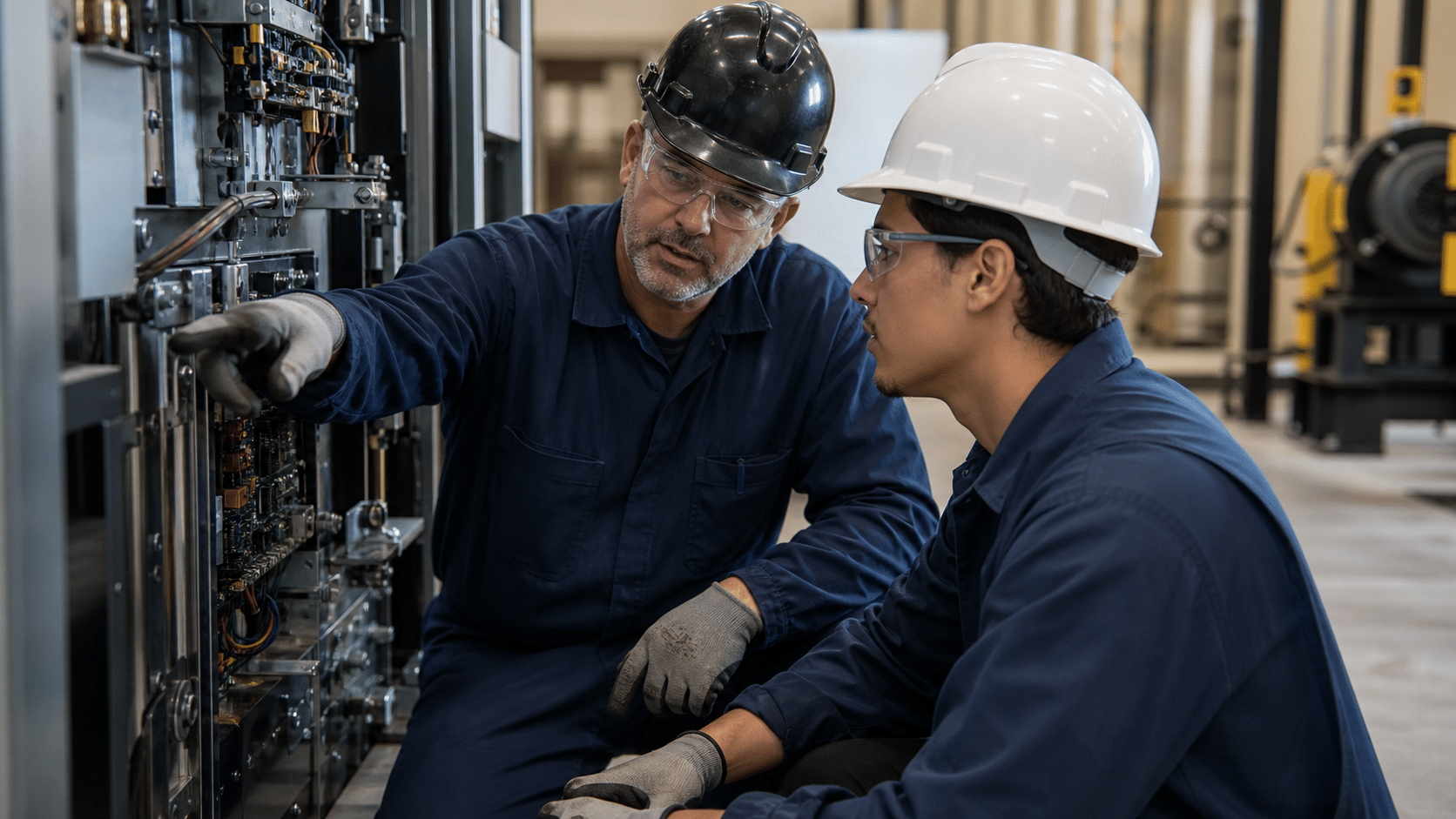
An elevator inspector examines elevators, escalators, lifts, and related safety equipment against the rules that apply in the jurisdiction. The work can include witnessing tests, reviewing maintenance records, checking safety devices, documenting deficiencies, and issuing or recommending approval. It is inspection work with serious public-safety consequences, and licensing or QEI requirements vary by state and employer.
The title can sound like a narrow version of elevator mechanic. It is not. Mechanics install and repair equipment. Inspectors check compliance and safety, often with authority that comes from a state, city, or accredited certification program.
An inspection is more than pressing the call button: The inspector may observe door operation, leveling, emergency communication, overspeed or safety functions, signage, machine-room conditions, and records of required maintenance. A clear report explains the specific deficiency and the action needed before the equipment can be treated as compliant.
What does an elevator inspector do?
Daily duties vary by employer and location, but an inspector may:
- Review elevator, escalator, and lift installation or maintenance records.
- Witness acceptance, periodic, and safety tests.
- Examine doors, interlocks, brakes, controllers, cables, emergency systems, and machine-room conditions.
- Compare the equipment with adopted codes, permits, plans, and inspection procedures.
- Photograph or document defects and explain what must be corrected.
- Prepare inspection reports, certificates, violation notices, or follow-up records.
- Return to confirm that required repairs or tests were completed.
An inspector is not simply looking for a machine that runs. A lift can move normally and still have a problem with an interlock, guarding, emergency communication system, documentation, or required test. The work rewards careful observation and clear writing.
Elevator inspector versus elevator mechanic
| Role | Main responsibility | Typical work |
|---|---|---|
| Elevator inspector | Check compliance and safety | Witness tests, inspect conditions, document findings, and issue or support approvals |
| Elevator mechanic | Install, maintain, and repair equipment | Troubleshoot controllers, doors, motors, brakes, cables, and other components |
| Building inspector | Check construction and building systems | Review structures, electrical, plumbing, HVAC, and code compliance across a project |
Our guides to elevator installer apprenticeships and elevator mechanic salary cover the hands-on repair route. The building inspector guide is a better comparison if you prefer construction sites and broader building-code work.
Training and experience
There is no single nationwide entry route for elevator inspectors. Requirements depend on the state or local authority, the type of inspection, and whether the work is performed for a government agency, insurance company, elevator contractor, building owner, or independent inspection organization.
Many people come to inspection after working with elevators, electrical systems, mechanical equipment, construction, or building maintenance. That experience helps because inspectors must understand what a technician is testing and recognize when a result does not make sense. It does not automatically satisfy a local license or certification rule.
ASME’s QEI-1 standard describes criteria used to qualify and train elevator inspection personnel and provides guidance for organizations that certify inspectors. A QEI credential may be relevant, but it is not a substitute for checking the rules where you plan to work. Ask the authority having jurisdiction which credentials, experience, exams, continuing education, and insurance requirements apply.
Codes, tests, and documentation
Elevator inspection work is tied to the codes adopted by the authority having jurisdiction. The exact edition and local amendments matter. An inspector may need to understand installation requirements, periodic testing, emergency operation, accessibility provisions, machine-room conditions, and the records required by the jurisdiction.
OSHA rules also matter for the people working around elevators and escalators. Lockout and tagout, fall hazards, electrical exposure, machine guarding, and access to shafts or machine rooms are practical safety concerns. An inspector should know when a test requires a controlled work area and when a condition should stop the inspection until it is made safe.
Good documentation is part of the safety work. A report should identify the equipment, location, test or condition observed, applicable requirement, evidence, and next action. Vague notes create more work for everyone. They can also make it difficult to prove that a safety issue was corrected.
Pay and career outlook
The Bureau of Labor Statistics does not publish a separate national profile for elevator inspectors. Its closest broad comparison is construction and building inspectors, an occupation with a May 2025 median annual wage of $74,690. BLS reports that construction and building inspectors usually need a high school diploma, related work experience is common, and many states or localities require a license or certification.
That benchmark is not an elevator inspector salary promise. An offer can change with elevator experience, certification, government or private employment, travel, overtime, inspection volume, location, and whether the role includes supervisory or engineering duties.
Before comparing offers, separate the base salary from travel reimbursement, overtime, vehicle allowances, benefits, paid training, certification costs, and any requirement to carry professional liability insurance. A job with less headline pay may be stronger if it provides supervised inspection experience and pays for the credentials you need.
Is elevator inspection a good career change after 40?
It can suit someone who likes technical equipment but wants less repair work and more independent evaluation. Previous experience with elevators, electrical systems, maintenance records, construction, safety, or code-based work can help.
The job still has physical and social demands. You may climb stairs, enter machine rooms, work around active construction, travel between buildings, and explain deficiencies to owners, contractors, or technicians who are under pressure. You also need enough patience to review records and write reports after the field visit.
Before paying for a course, contact the licensing authority in the state where you want to work. Ask what entry-level inspectors may do under supervision, which experience counts, and whether the credential you are considering is accepted. A short course that is not recognized locally will not solve the main barrier.
Questions to ask before choosing the route
- Which authority licenses or authorizes elevator inspectors in the target location?
- Does the role require prior elevator trade experience?
- Which code edition and test procedures does the employer use?
- Are training, certification, travel, and continuing education paid?
- How much of the week is field inspection versus report writing?
- What safety procedures apply during witnessed tests?
Bottom line
Elevator inspector is a specialized compliance and safety career. The work combines equipment knowledge, code reading, witnessed tests, field judgment, and precise reports. It may be a good next step for an experienced mechanic or maintenance worker who wants to evaluate work rather than perform every repair. Start with the local authority’s requirements, then compare the training route with an actual job posting.
Sources
- U.S. Bureau of Labor Statistics: Construction and Building Inspectors – duties, training, licensing context, May 2025 pay, and outlook; checked September 4, 2026.
- ASME: QEI-1 Standard for the Qualification of Elevator Inspectors – inspection personnel qualification and certification guidance; checked September 4, 2026.
- OSHA: Elevator repair and servicing – workplace safety considerations around elevator repair and servicing; checked September 4, 2026.