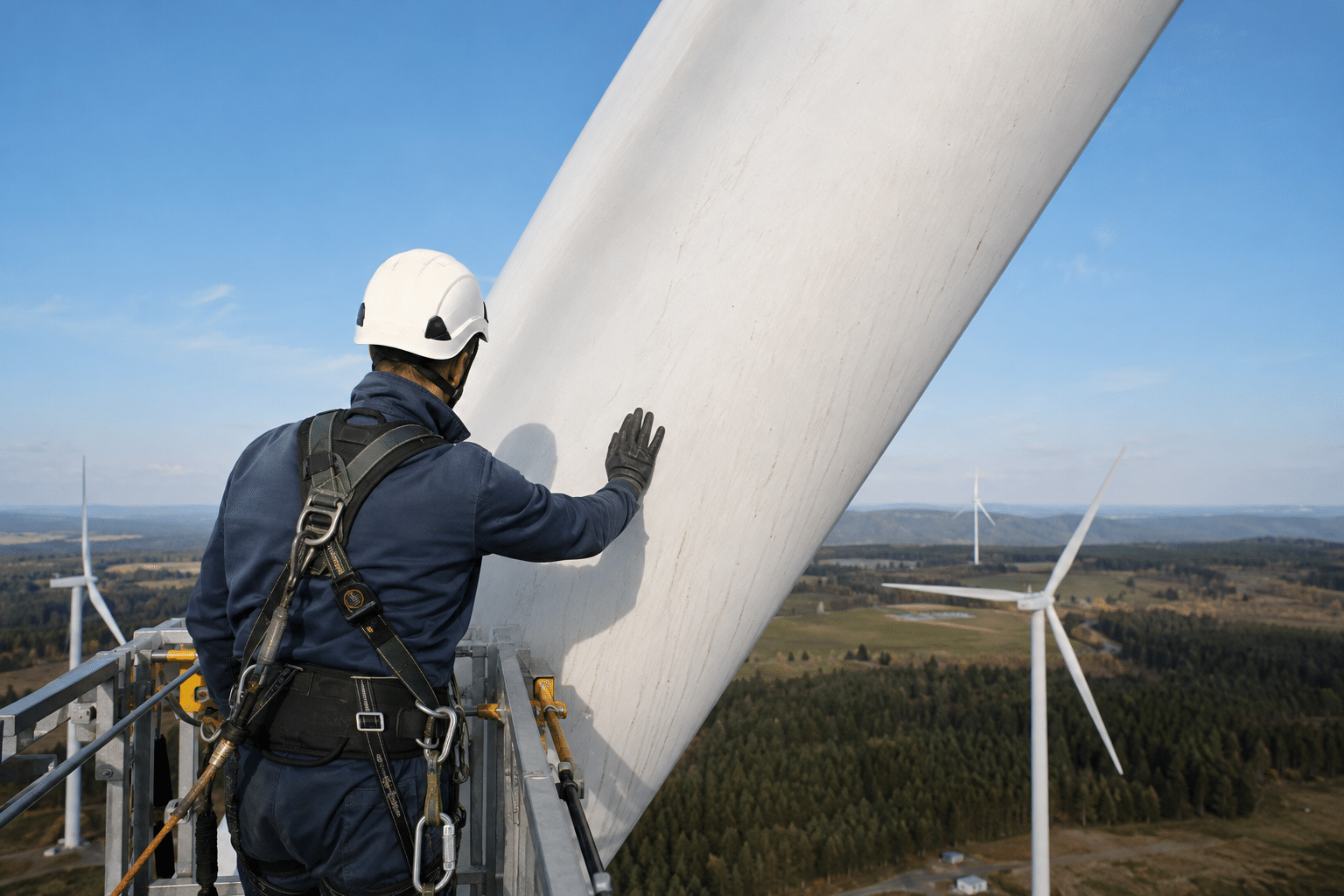
Wind turbine inspectors examine equipment that is difficult to reach and expensive to take offline. Their work may cover blades, towers, nacelles, ladders, platforms, bolts, corrosion, safety systems, and maintenance records. Some inspections are visual; others use ropes, lifts, drones, or specialized measurement methods. The job combines evidence gathering with a clear understanding of when a defect needs engineering review.
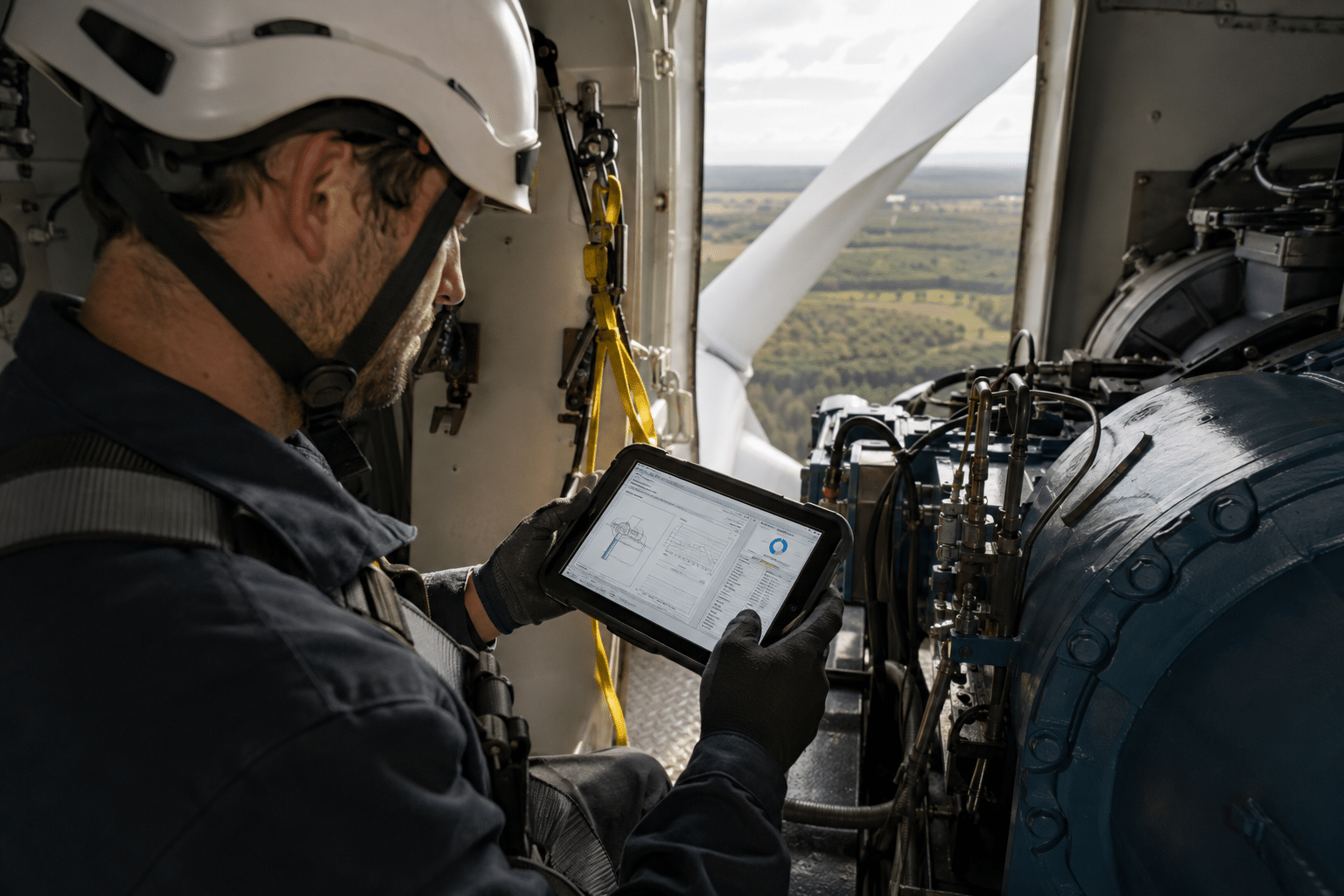
Inspection is more than spotting damage: A blade mark, loose fastener, oil leak, or corrosion pattern needs a precise location, useful photographs, and enough context for the maintenance team to judge its severity. Inspectors also need to respect weather limits, rescue procedures, fall protection, and the difference between an observation and a repair recommendation.
What does a wind turbine inspector do?
An inspection may cover blades, tower sections, ladders, platforms, fasteners, electrical equipment, hydraulic systems, lubrication, safety devices, and the nacelle. Inspectors look for cracks, erosion, corrosion, loose parts, leaks, unusual wear, and signs that a component needs repair. They may use visual checks, torque tools, meters, cameras, drones, rope access, or computerized maintenance systems.
The report is often as important as the physical inspection. A useful report identifies the component, location, observed condition, photos or readings, recommended action, and urgency. An inspector must separate what was directly observed from what still needs a specialist evaluation.
Where the work happens
Wind farms are usually remote and exposed to weather. Inspections may take place at ground level, inside a nacelle, on a platform, or near blades and towers. Some jobs involve climbing. Others focus on drone images, factory acceptance, data review, or scheduled maintenance planning.
Travel and weather delays are normal. A turbine can be quiet from the ground while a problem becomes obvious only after climbing or reviewing vibration and performance data. Safety planning comes before speed, especially when wind, lightning, ice, or equipment condition makes access unsafe.
Training and safety
Training depends on the inspection specialty. Employers may seek a postsecondary certificate, mechanical or electrical experience, and supervised turbine training. Common preparation includes working at heights, rescue, first aid, electrical safety, hydraulic awareness, and manufacturer procedures. There is no universal inspector certificate that replaces employer qualification.
The BLS describes the broader wind turbine service technician occupation. Its duties include inspecting towers, climbing to equipment, testing electrical, mechanical, and hydraulic systems, and collecting turbine data. OSHA also stresses lockout/tagout when workers service machinery, because unexpected startup or stored energy can cause serious injury.
Pay and outlook
Wind turbine inspector is not always reported separately from wind turbine service technician. For context, BLS lists a May 2025 median annual wage of $64,120 for wind turbine technicians and projects 30 percent growth from 2025 to 2035. Those numbers are for the broader occupation, not a promise about an inspection-only role. Contractor pay, travel allowances, per diem, and overtime can change the actual offer.
Can it fit after 40?
This career can work for a hands-on person who is comfortable with documentation and changing locations. Mechanical maintenance, aviation maintenance, industrial inspection, electrical work, or rope-access experience may help. A mature worker can also bring a useful habit: stop when the evidence or conditions are not good enough to continue.
The trade-offs are substantial. Heights, confined spaces, climbing, travel, weather, and irregular schedules are part of many jobs. If you prefer analysis to climbing, look for blade-inspection data, drone-support, reliability, or quality roles. Ask how often the position leaves the office or ground level.
A practical starting point
Read postings from turbine manufacturers, service contractors, and wind-farm owners. Compare the required training, travel radius, climb frequency, and equipment type. An entry-level wind technician role may be the most realistic route into inspection because it builds familiarity with the machine before you are expected to judge its condition.
Related reading includes our guides to wind turbine technician, solar maintenance technician, and industrial mechanic.
Separate access work from inspection judgment
Reaching a component and deciding what its condition means are different skills. Rope access, climbing, lift operation, or drone piloting may allow a worker to collect images, but they do not automatically qualify that person to classify blade damage, electrical defects, or structural concerns. Ask who reviews the evidence and which findings a trainee may close without engineering or manufacturer input.
Blade inspections may look for leading-edge erosion, cracks, lightning damage, coating failure, drainage issues, or contamination. Tower and nacelle inspections focus on a different set of components. Learn the naming and location system used by the employer so every image can be traced to a blade, section, clock position, platform, cabinet, or fastener group.
Build an inspection record that can drive maintenance
A useful report includes the turbine identifier, operating status, weather and access conditions, method used, exact location, dimensions when they can be measured reliably, and image references. Separate observed facts from suspected causes. Writing possible lightning damage is different from claiming that lightning caused a crack without supporting evidence.
Consistency matters when teams compare inspections over time. Repeat photographs from a similar angle, include scale when appropriate, and note when dirt, glare, distance, or access prevents a confident assessment. A maintenance planner needs to know whether the item requires immediate shutdown, closer inspection, scheduled repair, or monitoring at the next interval.
Check the lifestyle before committing
Wind inspection can involve remote projects, weather delays, seasonal travel, and several days away from home. Ask whether travel time is paid, how lodging and per diem work, and what happens when wind stops access after the crew arrives. If climbing is involved, discuss rescue practice and fitness expectations. A candidate who prefers analysis may be better suited to image review, condition monitoring, or planning than a travel-heavy climbing position.
Ask how inspection findings become work orders. Some teams collect thousands of images but provide little guidance on severity, comparison, or repair priority. A useful workflow lets inspectors see previous findings, mark the same location consistently, and learn how specialists resolved earlier cases. That feedback develops judgment. Without it, a new inspector may become fast at collecting pictures without getting better at recognizing which changes actually matter to turbine reliability.
Before applying, ask whether inspection equipment and personal fall-protection gear are supplied, inspected, and replaced by the employer. Clarify who owns drone data and whether travel days include paid preparation and reporting time.