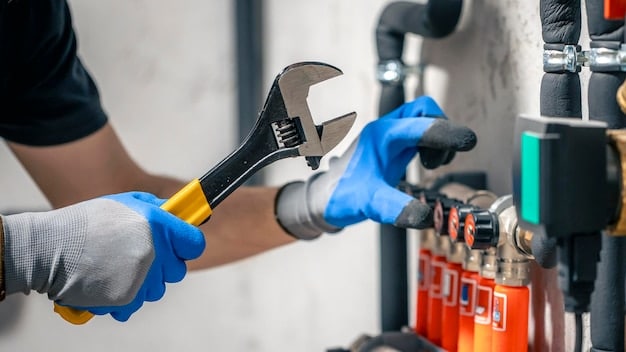
Becoming a plumber in the United States usually starts with helper work or an apprenticeship, followed by supervised experience and the licensing steps required where you live. You can often earn before you are licensed. Independent work, permits, and contractor responsibilities may require additional experience, exams, registration, or a separate license.
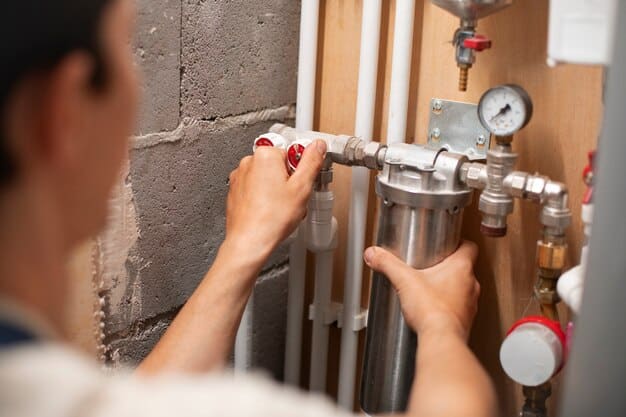
There is no single national plumbing license. That is the first thing to understand before paying for a course or leaving your current job.
Plan around the local checkpoint: Before leaving another job, contact the state or local licensing authority and ask which experience counts, who may supervise it, and whether an exam is required. Then compare helper jobs and apprenticeships by the work they document, not only the starting wage.
At a glance
| Route | Pay while learning | Classroom work | License checkpoint | Best fit |
|---|---|---|---|---|
| Helper or entry-level job | Usually paid by the employer | Limited or informal at first | Later, if required for the work | Someone who wants to test the trade quickly |
| Trade school first | Usually no wage while in school | Structured instruction | School may prepare you, but does not replace state rules | Someone who wants a foundation before applying |
| Registered apprenticeship | Yes, with progressive wage increases | Related instruction is part of the program | Sponsor and state requirements still apply | Someone who wants paid training and a clear progression |
The U.S. Bureau of Labor Statistics says most plumbers, pipefitters, and steamfitters learn through a four- or five-year apprenticeship. That is a common route, not a promise that every state or employer uses the same schedule.
Start with the type of plumbing work
"Plumbing" covers more than residential repair calls. You might install water and drain systems in new homes, maintain commercial buildings, work on industrial piping, service water heaters, or specialize in fire sprinklers. The work affects the training and license you need.
Residential service can give you frequent customer contact and a wide mix of repairs. New construction may offer a more predictable workflow but can involve jobsite travel and weather. Commercial or industrial work may bring larger systems, stricter safety procedures, and different specialties.
Before choosing a program, talk to two or three local employers. Ask what kind of work they actually do, which entry-level titles they hire, and what their apprentices are allowed to do during the first year. A course built around residential fixtures may not be the best preparation for industrial pipe work.
Three ways to get started
Apply to an employer as a helper
A helper supports licensed or experienced workers. Typical tasks include moving material, preparing tools, cleaning work areas, digging, measuring, and learning how a crew organizes a job. The title can be a practical way to see whether you can handle the pace, travel, customer contact, and physical demands before committing to a long program.
The tradeoff is that a helper job may not have a formal curriculum or a clear pay progression. Ask how the company moves reliable helpers into registered apprenticeships or higher-responsibility roles. If the answer is vague, treat the job as a short test rather than a complete training plan.
Attend a trade school first
A plumbing program can introduce pipe types, fittings, tool use, safety, blueprint reading, math, and basic code concepts. Some programs also include welding or other skills used in related piping work.
School can make you more comfortable on your first job, but it does not automatically make you a licensed plumber. Check what employers in your area recognize, whether the hours count toward a state requirement, and what costs are included. Ask about tools, books, exam preparation, placement support, and whether the schedule lets you work at the same time.
Apply for a registered apprenticeship
Registered Apprenticeship combines paid on-the-job learning, a mentor, related classroom instruction, wage increases as skills develop, and a portable credential. Opportunities are offered through employers and program sponsors. Apprenticeship.gov recommends searching its Apprenticeship Job Finder and applying directly to the employer or sponsor listed for the opportunity.
An apprenticeship is still a job. Attendance, safety, punctuality, and the ability to learn from correction matter as much as classroom performance. You may spend a long time doing basic work before you are trusted with more complex installations. That is frustrating for some people, but it is also how supervised experience is built.
If you are unsure where to begin, an American Job Center may help you find local apprenticeship and training options.
Understand the progression: helper, apprentice, journeyman, contractor
These labels are useful, but their legal meaning varies.
- A helper assists the crew and is still learning the basics.
- An apprentice works under supervision while completing job and classroom training.
- A journeyman, sometimes called a journey-level plumber, has completed the required training and passed the required exam or other state conditions. A journeyman can usually perform more work independently, but the exact limits depend on local rules.
- A master plumber has additional experience and may need another exam. Some states use this level when setting the requirements for a plumbing contractor license.
- A contractor is responsible for accepting jobs, managing the business, and meeting business and licensing rules. Being good at plumbing does not automatically make someone ready to run a contracting company.
Use your state licensing board as the final authority. The BLS notes that most states and some localities require plumbers to be licensed, and that requirements often include two to five years of experience, an exam, or both. Some cities add their own registration, permit, or inspection rules.
Budget for the first job, not just the course
The visible tuition is only part of the cost. Before you accept a route, list:
- work boots, eye protection, gloves, and other required safety gear;
- basic hand tools and a way to transport them;
- transportation to changing jobsites;
- application, background-check, school, or exam fees;
- lost income if you reduce your current hours;
- insurance or registration costs if you plan to work independently later.
Many employers supply specialized tools, but policies differ. Ask what you must bring on day one and what the company replaces when it wears out. A written answer can prevent an unpleasant surprise after you accept the job.
What changes after 40?
The basic route does not become shorter because you are older. You may, however, bring useful skills from another career: customer service, estimating, maintenance, logistics, safety, scheduling, sales, or troubleshooting. Those skills can help you move beyond entry-level work once your plumbing knowledge catches up.
The harder question is the income ramp. An apprentice earns less than a fully trained plumber, and the transition can take several years. Compare the starting wage, expected raises, commute, benefits, and family responsibilities before resigning from your current job.
Physical work deserves an honest trial. Plumbers may lift materials, climb ladders, work in tight spaces, travel between sites, and respond to evening or weekend emergencies. Spend a day observing a crew if you can. It is better to discover that the schedule or body position is a poor fit before paying for training.
A practical first-month checklist
- Choose the work setting you want to test: residential service, construction, commercial maintenance, or another specialty.
- Find your state and local licensing pages. Write down the experience, exam, registration, and permit rules that apply to the work you want.
- Search local employers and registered apprenticeship sponsors. Compare the actual job duties, pay progression, class schedule, commute, and tool policy.
- Prepare a short resume that shows reliability, mechanical work, driving, customer service, safety, or maintenance experience.
- Ask each employer who supervises trainees and how progress is measured.
- Keep your current income until the new route is real: written offer, start date, wage, schedule, and training expectations.
For the next decision, compare the paid-training route in our plumber apprenticeship guide and the money side in our plumber salary guide. The electrician career guide uses the same state-by-state caution for a related trade.
Sources and date checked
- U.S. Bureau of Labor Statistics: Plumbers, Pipefitters, and Steamfitters, checked August 30, 2026.
- Apprenticeship.gov: Career Seekers, checked August 30, 2026.
- Apprenticeship.gov: Apprenticeship Occupations, checked August 30, 2026.
Licensing details must be confirmed with the relevant state and local authority before you enroll, accept work, or advertise plumbing services.
\n
Reviewed September 3, 2026: Plumbing routes still vary by state, employer, and sponsor. Before enrolling, ask who provides supervised hours, whether the work is paid, and which license the route supports. Compare the path with plumber apprenticeships and the plumber timeline.