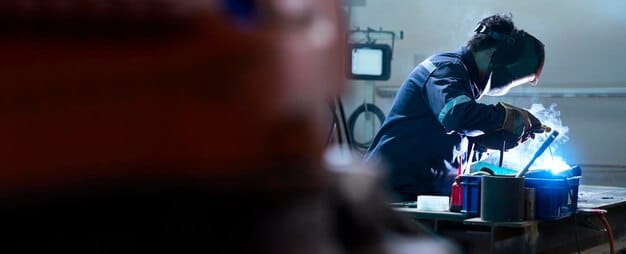
Welding can be hard on the body because the work may combine awkward positions, heat, lifting, fumes, bright arcs, and long periods of standing. A production booth, fabrication shop, construction site, shipyard, and repair job can feel very different. The right question is which hazards and postures occur repeatedly in the job you are considering.
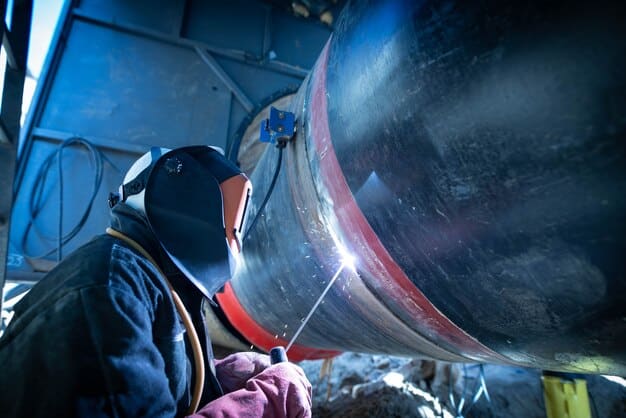
The Bureau of Labor Statistics describes welders as workers who may lift heavy objects and work overhead, while bending, stooping, or standing. OSHA identifies fumes, UV radiation, burns, eye damage, electrical shock, cuts, and crushed fingers or toes as hazards. A job should control those hazards; toughness is not a safety plan.
Ask to see the work area: A production welder may work at a fixed booth with extraction and repeatable positions. A field welder may carry equipment, work outdoors, weld overhead, and adapt to changing surfaces. The same trade can place very different demands on your back, knees, eyes, and breathing.
The task matters more than the job title
| Work setting or task | What may make it demanding | Question to ask |
|---|---|---|
| Production welding | Repeating one posture, heat, noise, and high output expectations | How often can the task or position change? |
| Fabrication | Moving material, fit-up, grinding, standing, and repeated handling | Which lifting aids and fixtures are available? |
| Construction or repair | Weather, travel, uneven surfaces, awkward positions, and changing jobs | How much work is overhead or outdoors? |
| Shipyard or confined work | Limited access, fumes, heat, noise, and difficult entry or exit | What permits, ventilation, attendant, and rescue procedures apply? |
| Inspection or fit-up support | Less arc time, but still standing, measuring, and moving around the jobsite | What field exposure remains in the role? |
No national source can tell you how often a particular employer requires overhead welding or kneeling. Ask about the actual work mix.
Posture and repetition
The weld itself may take minutes, but setup, fit-up, grinding, repositioning, and cleanup fill the rest of the shift. You may work with your neck bent toward the joint, hold your arms forward, kneel beside a structure, or reach overhead. Repeating a tolerable position for hours can create a different problem from performing it briefly.
Fixtures, adjustable tables, turntables, lifts, and better work positioning can reduce avoidable strain. Ask whether workers can bring the part to a comfortable height or whether they must bring their bodies to the part. That answer tells you something about the shop’s approach to production and safety.
Moving material is part of the job in many settings. Find out whether welders handle stock alone, whether a material handler or crane operator is available, and how large pieces are secured before work begins. Never guess at the weight or stability of a piece.
Fumes, light, heat, and noise
OSHA lists metal fumes and UV radiation among the health hazards of welding, cutting, and brazing. The agency points to work practices and PPE, while its standards address ventilation and protection in specific conditions. Local exhaust should be positioned to control fumes at the source when required, and confined-space work needs a more formal plan.
Ask what metal coatings, paints, or residues may be present. Ask how ventilation is checked, what respiratory-protection program applies, and what happens when the local exhaust cannot keep up. A shop that cannot answer basic questions about fumes deserves caution.
The arc creates intense light, and hot metal remains dangerous after the visible work stops. Eye and face protection, gloves, protective clothing, hearing protection, and footwear should match the task. The employer should explain the equipment and the limits of each item instead of treating PPE as a replacement for ventilation or safe setup.
Shop work and field work are different
A production shop may offer fixed equipment, predictable materials, and a controlled floor. It can still be hot, noisy, repetitive, or fast-paced. A field welder may travel, work outdoors, climb, carry equipment, protect the work area, and adapt to wind or changing surfaces. Repair work can involve dirt, old coatings, damaged structures, and uncertain access.
Construction and shipyard work can add scaffolds, lifts, confined spaces, and other trades working nearby. Ask how the employer plans hot work, controls sparks, checks the atmosphere, handles cylinders, and coordinates with the rest of the crew.
Questions to ask during a job shadow
- What percentage of the shift is welding, fit-up, grinding, lifting, and cleanup?
- Which positions are common: flat, horizontal, vertical, overhead, or inside a structure?
- How often do workers change posture or move to another fixture?
- What are the usual materials, coatings, and ventilation controls?
- Who moves heavy parts, and what lifting equipment is available?
- Are shifts, overtime, travel, or weather exposure part of the normal job?
- What happens when a worker reports a fume, heat, or ergonomic concern?
The answers should be specific. “We take safety seriously” is not a description of a work process.
Ways crews reduce avoidable strain
Good practices may include positioning the work at a usable height, using fixtures and lifting aids, keeping floors clear, maintaining ventilation, planning hot work, and allowing workers to follow the required safety procedures. The right control depends on the metal, process, setting, and hazard assessment.
You should also learn how the company handles breaks, hydration, heat, noise, and recovery after long shifts. A schedule with regular overtime can change the practical burden even when the task itself looks manageable on paper.
If you have a current injury, diagnosed condition, or concern about a specific exposure, ask a qualified medical professional for advice about your situation. This article cannot decide whether you personally can perform a welding job safely.
After 40: choose the work mix deliberately
Previous experience in maintenance, mechanical work, inspection, quality control, drawings, or industrial safety can help you understand a shop quickly. It does not remove the need to build welding skill or tolerate the physical positions of the role.
You may eventually prefer fit-up, inspection, estimating, quality control, or supervision. Those roles can change the field mix, but credibility usually comes from understanding the work first. Start by asking what entry-level tasks are paid, what training is provided, and how workers move into less arc-intensive responsibilities.
Read How to Become a Welder for entry routes and How Long Does It Take to Become a Welder? for the skill timeline. For another trade with different exposures, compare Is HVAC Hard on the Body After 40?.
Bottom line
Welding can be physically demanding and hazardous, especially when the work involves awkward positions, heavy metal, heat, fumes, or confined spaces. The better question is whether the employer controls the hazards and whether the daily task mix fits you. Job-shadow the actual work before committing to a course or a major career change.
Sources and date checked
- U.S. Bureau of Labor Statistics: Welders, Cutters, Solderers, and Brazers, checked August 30, 2026.
- OSHA: Welding, Cutting, and Brazing – Hazards and Solutions, checked August 30, 2026.
- OSHA: General Requirements for Welding, Cutting, and Brazing, checked August 30, 2026.
This welding guide explains common physical demands and safety questions; it cannot assess your health or replace the procedures and protective training required by an employer.
\n
Reviewed September 3, 2026: Welding can be manageable in one shop and demanding in another. Posture, heat, fumes, lifting, confined spaces, and production pace matter more than the job title alone. Compare the work with carpentry physical demands.
\n
Reviewed September 3, 2026: Welding demands depend on process, posture, heat, fumes, lifting, and production pace. Visit or speak with someone in the type of shop you are considering. The certification guide adds the training side.