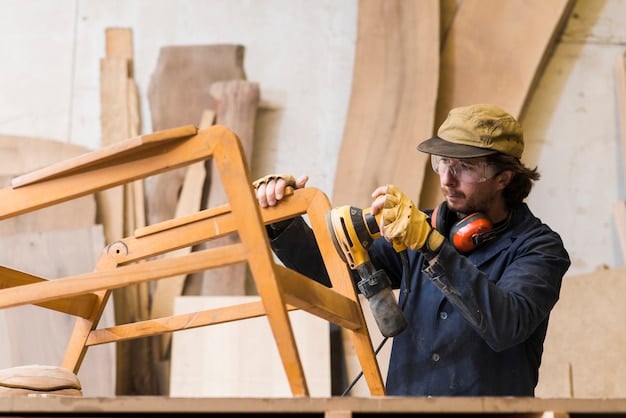
Carpentry can be demanding, but the physical load changes with the specialty. Framing and formwork may involve lifting, ladders, kneeling, and outdoor exposure. Finish carpentry and cabinet work may involve more standing, reaching, measurement, and repetitive hand work. The employer’s actual job mix matters more than the word carpenter.
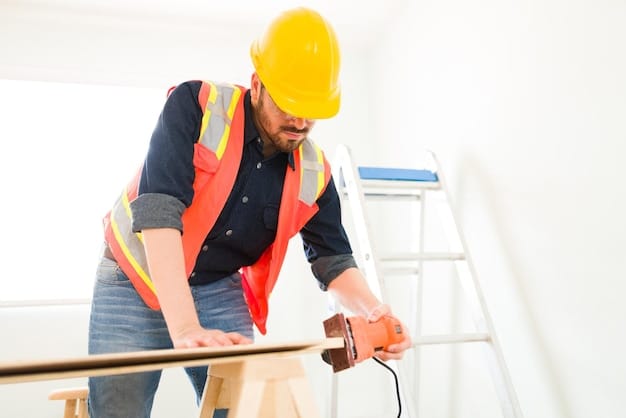
The Bureau of Labor Statistics says carpenters work indoors and outdoors, often alternating between lifting, standing, and kneeling. It also notes strains from overexertion, falls, slips, trips, and contact with objects or equipment. Those facts describe occupational risks, not a prediction about your personal health.
Ask how the company controls the load: A framing crew may use lifts, staging, material carts, and team carries. A finish crew may reduce heavy lifting but repeat kneeling, reaching, and hand-tool work. The answer tells you more about long-term fit than a generic statement that carpentry is physically demanding.
Compare the work setting
| Work setting or task | Possible physical demands | Question to ask |
|---|---|---|
| Framing | Carrying lumber, ladders, repetitive fastening, weather, and changing sites | How much material does each worker move, and with what help? |
| Remodeling | Demolition, kneeling, dust, stairs, tight rooms, and protecting occupied homes | How much of the day is demolition versus installation? |
| Finish carpentry | Repeated measuring, bending, kneeling, fine cuts, and long periods of standing | Can the work be raised or supported to reduce floor-level work? |
| Cabinet or interior installation | Carrying panels, awkward grips, tight rooms, and precision work | Who helps move and position large pieces? |
| Commercial or formwork | Larger crews, ladders, scaffolds, lifting, and structured schedules | What equipment and access systems are used? |
Ask about the actual job, not the most attractive version of the title. A company that mainly installs trim has a different physical profile from one that builds roof structures or concrete forms.
Lifting, carrying, and awkward positions
Carpenters handle tools and materials throughout the day. Some jobs require moving lumber, panels, doors, cabinets, or equipment. The difficulty comes from the weight, the distance, the stairs, the grip, and whether the material can be moved with another person or a mechanical aid.
The BLS says carpenters may use heavy tools and materials and may stand, climb, or bend for many hours. That does not mean every worker repeatedly lifts the same maximum load. Ask how materials arrive, where they are stored, and whether workers are expected to carry them alone.
Kneeling and crouching can be just as important as lifting. Flooring, baseboards, low framing, and remodeling work may keep you near the floor. Finish work may reduce large material handling but demand accuracy in fixed positions. A job shadow will reveal this faster than a course brochure.
Ladders, scaffolds, and changing jobsites
Construction work may involve ladders, scaffolds, elevated platforms, uneven ground, and incomplete surfaces. OSHA provides specific ladder and fall-protection guidance because misuse, unstable footing, and unprotected edges can cause serious injuries.
Ask how ladders are inspected, how materials are brought to elevated areas, and what fall-protection systems apply. You should also find out whether the company provides the right access equipment or expects workers to improvise. A worker should not be asked to balance on a bucket or carry tools in both hands while climbing.
Weather changes the physical experience. Heat, cold, rain, wind, and mud can affect footing, fatigue, and schedule. Outdoor work may slow or stop in bad conditions, but the pressure to finish can still be present. Ask how the employer handles weather delays and whether the schedule changes when conditions are unsafe.
Repetition and precision
Carpentry is not only heavy work. Measuring, cutting, fastening, sanding, and checking alignment can repeat for hours. Small errors may lead to rework, and rushing to recover time can increase strain. Good layout and staging reduce wasted movement, but the job still requires attention and patience.
Ask whether workers rotate between tasks, whether tools are staged close to the work, and whether the crew uses work supports or lifts for repetitive installation. These details affect the day more than a general statement that carpentry is “hands-on.”
Questions for a job shadow
- What percentage of a normal day is lifting, carrying, demolition, installation, cleanup, and travel?
- How often do workers kneel, climb, reach overhead, or work in cramped spaces?
- What are the heaviest or most awkward materials a new worker handles?
- Are carts, lifts, scaffolds, team lifts, or material handlers available?
- Who supplies boots, eye protection, hearing protection, hardhats, and other PPE?
- How are ladders and elevated work areas inspected and set up?
- What happens when a worker reports pain, unsafe access, or an unstable load?
The employer’s answers should match what you see. If the written description says “assist with installation” but the shadow shows constant solo carrying and ladder work, plan around the reality.
Ways to reduce avoidable strain
Useful controls may include better material staging, carts, team lifts, mechanical assistance, safe access equipment, clear walkways, task rotation, and planning work at a comfortable height. The correct approach depends on the project and the hazard assessment.
Personal habits matter too, but they cannot replace an unsafe work method. Do not lift a load you cannot control just to prove you belong. Ask for help, follow the employer’s training, and stop when access or stability is not adequate.
If you have a current injury, diagnosed condition, or concern about a specific task, ask a qualified medical professional for advice about your situation. A general career article cannot determine whether your body can safely perform a particular job.
After 40: look at the full career path
Previous work in maintenance, logistics, estimating, customer service, safety, or project coordination can help you become useful on a crew. It does not replace carpentry-specific practice, and it does not remove the physical demands of the first job.
Ask about progression toward lead carpenter, estimator, superintendent, inspection, project coordination, or specialized finish work. These roles can change the task mix over time, but they are not shortcuts. The best route is one that gives you useful supervised experience without pretending that every carpentry specialty feels the same.
Read How to Become a Carpenter for entry routes and How Long Does It Take to Become a Carpenter? for the learning timeline. For a different physical profile, compare Is Plumbing Hard on the Body?.
Bottom line
Carpentry can be hard on the body because it combines material handling, ladders, kneeling, standing, awkward access, weather, and repetition. The burden changes with the specialty and the crew’s work methods. Spend time around the actual job before paying for training or leaving stable work.
Sources and date checked
- U.S. Bureau of Labor Statistics: Carpenters, checked August 30, 2026.
- OSHA: Ladder Safety in Construction, checked August 30, 2026.
- OSHA: Fall Protection – Construction, checked August 30, 2026.
This article describes job conditions and general safety questions. It is not a medical assessment or a substitute for the employer’s safety training.
\n
Reviewed September 3, 2026: Carpentry can feel very different in framing, finish work, remodeling, and shop settings. Ask how often a job involves ladders, kneeling, lifting, weather, or repetitive work, then compare it with welding demands.